Customer Support API Guides & Samples
Guides and tutorials to get started with the developer tools of Apideck.
Use Apideck with OpenAI Agents SDK
Check OpenAI Agents SDK tool wiring, discover an operation and read one invoice with a bounded server-side tool.
Use Apideck with Vercel AI SDK
Check Vercel AI SDK tool wiring, discover an operation and read one invoice with a bounded server-side tool.
Use Apideck with LangGraph
Check LangGraph tool wiring, discover an operation and read one invoice with a bounded server-side tool.
Use Apideck with CrewAI
Check CrewAI tool wiring, discover an operation and read one invoice with a bounded server-side tool.
Use Apideck with Pydantic AI
Check Pydantic AI tool wiring, discover an operation and read one invoice with a bounded server-side tool.
Build with AI frameworks
Choose an agent framework, verify its connection and give it a bounded Apideck API tool.
Use Apideck with LangChain
Run a Python connection check, read one invoice and give your LangChain agent a bounded API tool.
Verify and troubleshoot MCP
Verify Documentation MCP or the Apideck MCP server, discover tools, complete a useful task and recover from connection errors.
Investigate a failed request
Follow a synthetic failure through parent and child logs, correct the cause and verify recovery or a justified stop.
Security & data handling
Understand Zero Data Retention, Vault credentials, optional logs, permissions, and the QuickBooks Desktop storage exception.
Use the API Explorer
Set up credentials, send a request, inspect responses, and troubleshoot connector calls in the API Explorer.
Get Started
Get started Apideck quickly. Make your first Unified API call and start adding integrations to your product.
Webhooks
Learn about Unify webhooks to receive real-time updates from Unified APIs with native and virtual webhooks.
Field Mapping
Learn how to extend the Apideck models and map fields from the integrations to have them returned by the Unified APIs.

Unified Pass Through
Extend requests to handle specific needs of different services that are outside the Unified Model.

Unified Rate Limits
Learn about the different rate limit headers that are returned by the Unified APIs and how to handle them.
Vault Connection States
Learn about the different Vault connection states, the meaning of each state and how to handle them.
Authorize Connections
There are multiple ways of allowing your customers to authorize connections. Learn more about the different options.
End-user Consent
What to show your users before they connect a system through Apideck, and what to cover in your own terms and privacy policy.
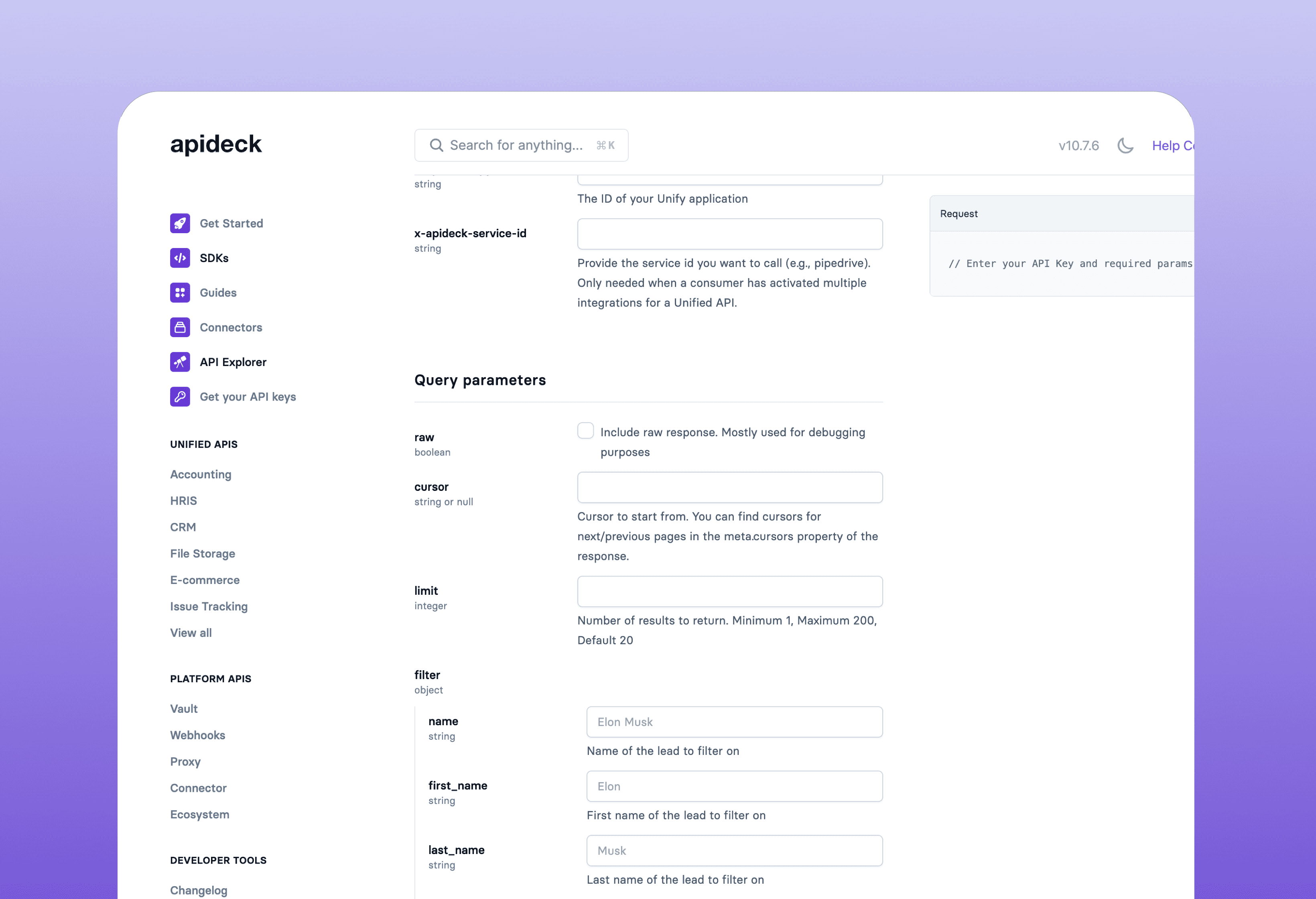
Getting Downstream Responses
How to get the raw response from the Unified APIs to get more details about the downstream API response.
SDK migration guide
How to migrate to the new Apideck SDKs including new SDKs for Typescript, PHP, Python, and more.
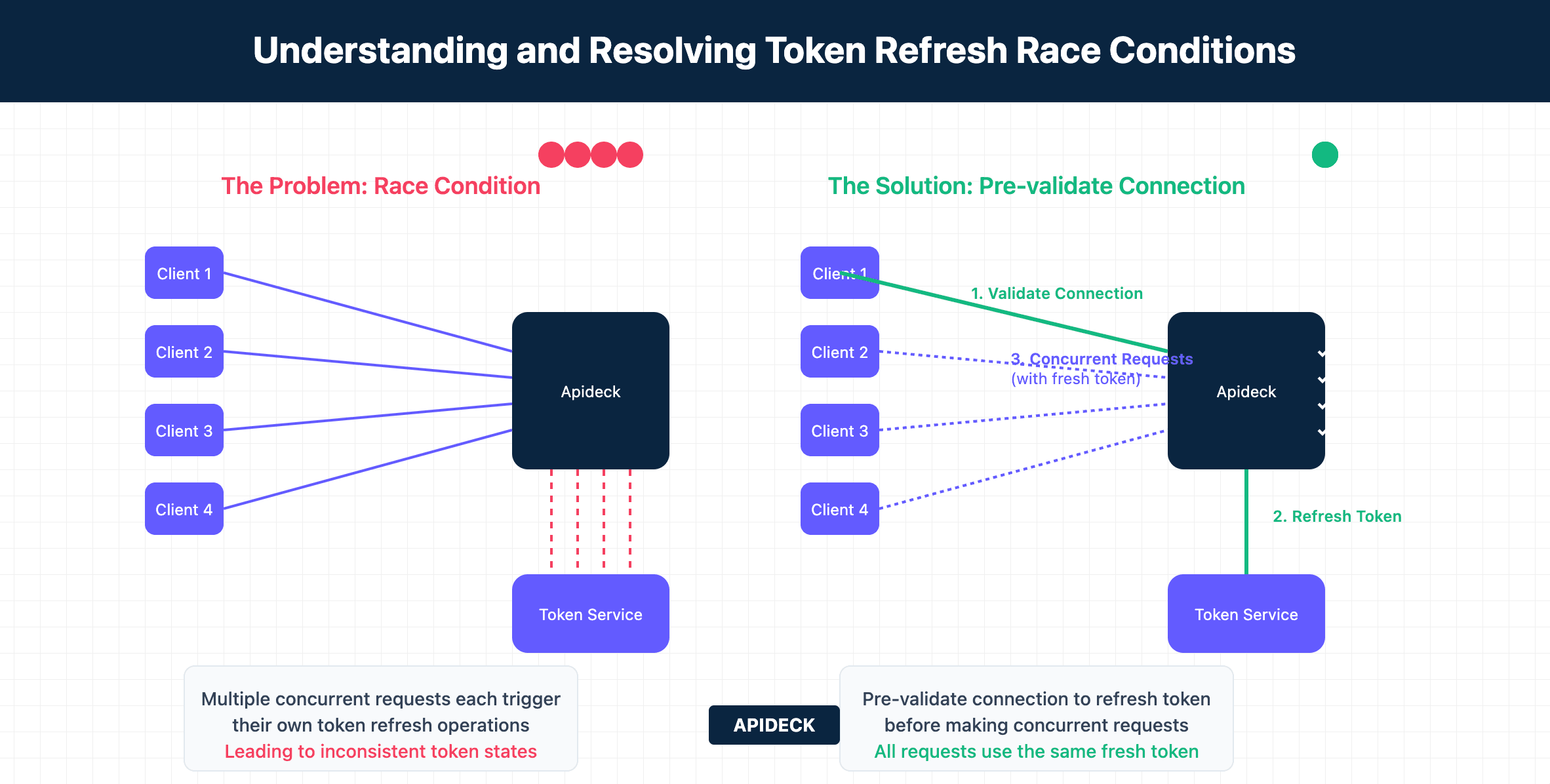
Refresh Token Race Condition
How to handle the refresh token race condition in API Requests for OAuth Connectors like Xero and Salesforce.
Understanding Consumers
Learn what consumers are, how active consumers affect billing, and how to structure consumer IDs for your integration.
Handling Long-Running Requests
Use x-apideck-timeout on the Proxy API and decide when to switch from unify.apideck.com to longrun.apideck.com for slow downstream calls.